Are you curious about why your pug loves to nap during the day? Look no further! In this article, we will unravel the secrets behind pug napping and help you understand their sleep patterns.
Discover the factors that influence their daytime snoozes and learn the rituals they follow. Plus, we'll share tips on managing their napping habits and the benefits of embracing pug nap time.
Get ready to solve the mystery of pug napping!
The Science Behind Pug Napping
Do you know how pugs can take such long naps during the day? It's all about their unique sleep cycles and napping techniques.
Pugs have a different sleep pattern compared to humans. While we've a continuous sleep cycle, pugs have shorter sleep cycles throughout the day. They enter a deep sleep for about 10 to 15 minutes, followed by a brief period of rapid eye movement (REM) sleep. This pattern allows them to recharge quickly and be ready for their playful antics.
Pugs have mastered the art of napping. They can curl up in the coziest corners, snuggle into blankets, or even doze off on your lap. Their napping techniques involve finding the perfect spot that provides comfort and security. Pugs are experts at creating a cozy nook for themselves, whether it's a soft cushion, a warm blanket, or a sunlit spot by the window.
Another fascinating aspect of pug napping is their ability to adjust their sleep schedule based on their surroundings. They can adapt to the routines of their human companions and take quick power naps whenever they find a chance. This flexibility allows them to catch up on their beauty sleep without disrupting their daily activities.
Understanding Pug Sleep Patterns
Have you ever wondered how pug sleep patterns can vary depending on their age and daily activities, but still maintain a consistent overall routine? Pugs, like many other dog breeds, have distinct sleep cycles that contribute to their overall sleeping patterns. Understanding these patterns can help us comprehend how pugs sleep and why they sometimes experience common sleep disturbances.
Pugs typically have shorter sleep cycles compared to humans. They go through four stages of sleep: drowsiness, light sleep, deep sleep, and REM sleep. As they age, their sleep cycles change. Pug puppies tend to sleep more during the day, while adult pugs have shorter naps and more active periods. Their sleep patterns can also be influenced by their daily activities. If a pug engages in vigorous exercise, they may require more sleep to recover.
Despite these variations, pugs generally follow a consistent overall routine. They're known for their love of napping, often opting for short and frequent snoozes throughout the day. However, like humans, pugs can experience common sleep disturbances such as sleep apnea, insomnia, and snoring. These disturbances may be caused by factors like obesity, allergies, or certain medical conditions.
Factors Influencing Daytime Snoozes
You may be surprised to learn that there are actually five key factors that influence the duration and frequency of your pug's daytime snoozes.
Napping duration is affected by various environmental factors. First and foremost, the temperature of the surroundings plays a significant role. Pugs are known for their sensitivity to heat, so if the room is too warm, it may disrupt their sleep and cause them to wake up more frequently.
Similarly, excessive noise can disturb their naps, so it's important to provide a quiet and calm environment for them to rest.
Another factor to consider is the level of comfort in their sleeping area. Pugs prefer soft and cozy surfaces, so providing a comfortable bed or blanket can help them settle down for longer naps. Additionally, the amount of natural light in the room can affect their sleep patterns. Pugs tend to be more active during daylight hours, so it's beneficial to create a dark and quiet environment for them to nap during the day.
Lastly, your pug's overall health and energy levels can impact their napping duration. If they're feeling unwell or overly tired, they may require more frequent and longer naps to recharge.
Unraveling the Pug Nap Rituals
Unraveling the Pug Nap Rituals is a fascinating topic, as it reveals the intricate behaviors and patterns that pugs engage in during their daytime snoozes.
When it comes to pug napping, the duration and preferences of these furry creatures have sparked much curiosity among researchers and pet owners alike.
One aspect that stands out is the pug nap duration. Pugs are notorious for their love of sleep, often spending hours in a peaceful slumber. While the average duration varies, it isn't uncommon to find pugs snoozing for up to 14 hours a day. These adorable creatures seem to have mastered the art of relaxation, taking leisurely naps to recharge their energy.
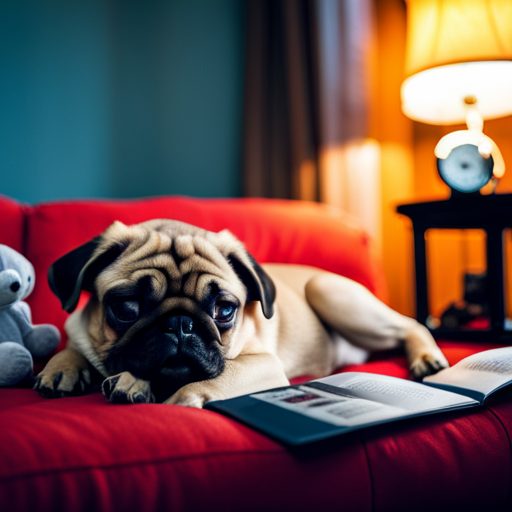
In addition to the duration, pug nap preferences also play a significant role in their daytime snoozes. Some pugs enjoy curling up in a cozy blanket or snuggling against a soft pillow, while others prefer finding a sunny spot to bask in the warmth. It seems that pugs have unique preferences when it comes to their napping environment, which adds another layer of intrigue to their rituals.
Understanding the intricacies of pug napping can provide valuable insights into their overall well-being and behavior. Whether it's observing their nap duration or catering to their preferences, unraveling the pug nap rituals allows us to better care for these lovable companions.
Tips for Managing Pug Napping Habits
To ensure a restful sleep for your pug, try providing a comfortable bed and a quiet environment. Pugs are known to be avid nappers, often taking multiple short naps throughout the day. Understanding their nap duration and creating a cozy nap space is crucial in managing their napping habits.
When it comes to pug nap duration, it can vary from dog to dog. On average, pugs tend to nap for around 14-18 hours a day. However, this can change depending on their age, activity level, and overall health. It's important to observe your pug and determine their individual nap needs.
Creating a cozy nap space is essential for your pug's comfort. Invest in a quality bed that offers proper support for their joints and promotes good posture. Consider their preferences, such as whether they like a fluffy bed or a more firm surface. Additionally, ensure the bed is in a quiet and peaceful area of your home, away from any distractions or noise.
Furthermore, establishing a consistent nap routine can help regulate your pug's sleep patterns. Try to provide them with a calm and predictable environment during their nap times. Dim the lights, play soft music, or use a white noise machine to create a soothing atmosphere.
The Benefits of Embracing Pug Nap Time
You may wonder why embracing pug nap time is beneficial, but let me tell you, it has its perks.
Taking a quick snooze with your pug can actually increase your productivity and focus when you wake up, allowing you to tackle tasks with a refreshed mind.
Not only that, but it also improves your mood and promotes relaxation, making you feel rejuvenated and ready to take on the day.
Increased Productivity and Focus
Take advantage of pug nap time to boost your productivity and focus.
While pugs may be notorious for their love of snoozing, their napping habits can actually enhance your cognitive abilities and boost creativity. Research has shown that taking short power naps throughout the day can significantly improve overall brain function.
When you join your pug in a midday siesta, you give your brain a chance to recharge and reset, increasing your ability to concentrate and problem-solve. Moreover, these naps can stimulate your imagination and promote creative thinking.
Improved Mood and Relaxation
When you cuddle up with your pug during nap time, you'll feel a sense of tranquility and contentment. It's not just about the warm embrace and soft fur; there's actually scientific evidence to support the positive impact of pug cuddles on your mental health.
Research has shown that spending time with pets, such as pugs, can lead to improved mental health and stress reduction. The act of cuddling releases oxytocin, a hormone associated with feelings of love and happiness. This hormone helps to reduce stress and anxiety, promoting a sense of calmness and relaxation.
Frequently Asked Questions
How Many Hours of Sleep Does a Pug Need Each Day?
You'll be surprised to learn that pug puppies need around 14 to 16 hours of sleep each day. However, the optimal sleep duration may vary depending on their age and activity level. Regular exercise can also impact their sleep patterns.
What Are the Common Signs of a Pug Needing a Nap?
Do you wonder if pugs prefer to nap alone or with their owners? Or how they choose their favorite napping spots? Let's uncover the common signs of a pug needing a nap.
Can Pug Napping Habits Be Influenced by Their Breed or Age?
Pug napping habits can be influenced by their breed or age. Factors like exercise levels, environment, and daily routine impact their patterns. Understanding these correlations helps unveil the secrets of their daytime snoozes.
What Are Some Strategies to Prevent Pug Napping From Disrupting Their Nighttime Sleep?
To prevent pug napping from disrupting their nighttime sleep, establish a consistent bedtime routine and limit daytime napping in a designated area away from their sleep space.
Are There Any Health Concerns Associated With Excessive Pug Napping?
Excessive pug napping can have health concerns. Regular exercise is crucial for pug health as it helps maintain energy levels and overall activity. Keep an eye on their nap habits to ensure a balanced lifestyle.
Conclusion
In conclusion, understanding the science behind pug napping and their sleep patterns can help unveil the secrets of their daytime snoozes. Factors like age, breed, and activity levels influence their nap habits. Embracing and managing their napping habits can have numerous benefits for both pugs and their owners.
So, next time you see your pug taking a nap, remember to let them enjoy their well-deserved rest and recharge their adorable pug batteries.