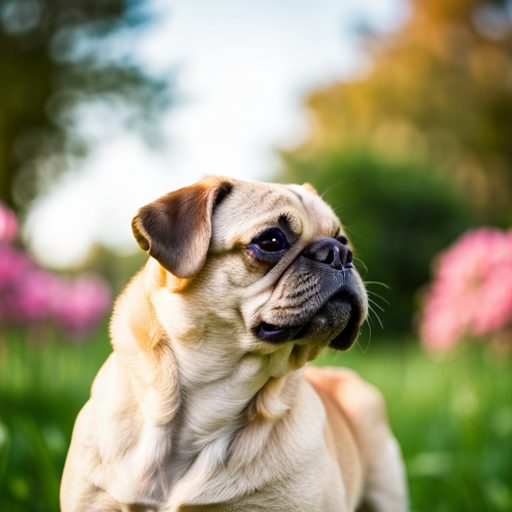
If you're considering adding an apricot pug to your family, it's important to understand their temperament. These adorable dogs are known for their social nature and friendly disposition. They have moderate energy levels and require regular exercise to keep them happy.
With their intelligence and trainability, they can be easily taught new tricks. However, apricot pugs can also develop separation anxiety due to their strong attachment to their owners.
In this article, you'll learn all about the temperament of apricot pugs and how to meet their specific needs.
Socialization and Friendliness
You should prioritize the socialization of your Apricot Pug to ensure their friendliness towards others. Apricot Pugs are known for their adaptability and responsiveness, which makes them great companions. However, without proper socialization, they may become fearful or anxious in new situations or around unfamiliar people or animals.
Socialization plays a crucial role in helping your Apricot Pug develop good social skills and confidence. Introduce them to different environments, people, and animals from a young age. Expose them to various sights, sounds, and experiences to help them become more adaptable and responsive. Positive and controlled interactions with other dogs, children, and adults can help them become more comfortable and friendly around others.
Fearfulness can be a common issue in Apricot Pugs if they aren't properly socialized. They may become timid or anxious, leading to behavioral problems. By exposing them to different stimuli and situations, you can help them overcome their fears and build their confidence.
Energy Levels and Activity Needs
An Apricot Pug requires regular exercise to meet their energy levels and activity needs. These adorable little dogs may be small in size, but they've plenty of energy to burn. To keep your Apricot Pug happy and healthy, it's important to provide them with enough physical activity.
Exercise requirements for an Apricot Pug are moderate. They enjoy daily walks, but they also benefit from interactive playtime. Creating a playtime schedule can help ensure that your furry friend gets the exercise they need. Incorporate activities such as fetch, tug-of-war, or even agility training to keep them engaged and active. Remember to always supervise playtime to prevent any accidents or injuries.
In addition to regular exercise, it's also important to consider the individual temperament of your Apricot Pug. Some may have higher energy levels than others, so it's essential to tailor their exercise routine accordingly. If you notice that your Pug is becoming restless or displaying destructive behavior, it may be a sign that they need more exercise.
Trainability and Intelligence
Understanding the trainability and intelligence of your Apricot Pug can help you tailor your training approach to their specific needs. Apricot Pugs are known for their trainability challenges, but with the right techniques, they can learn just like any other dog. These lovable companions possess problem-solving abilities that can be tapped into during training sessions.
When it comes to trainability challenges, Apricot Pugs may have a stubborn streak. They can be independent thinkers, which means they may not always follow commands without question. However, this doesn't mean they're unintelligent. On the contrary, Apricot Pugs are quite clever and have the potential to excel in training if approached correctly.
To make the most of their problem-solving abilities, it's important to keep training sessions engaging and interactive. Apricot Pugs thrive on mental stimulation, so incorporating puzzle toys or interactive games into their training routine can be highly beneficial. This not only keeps them mentally stimulated but also helps them develop their problem-solving skills.
In addition, using positive reinforcement techniques, such as rewards and praise, can motivate your Apricot Pug to learn and perform desired behaviors. They respond well to positive reinforcement and are eager to please their owners.
Separation Anxiety and Attachment
Having a strong attachment with your Apricot Pug can lead to separation anxiety, which may cause them distress when you leave. It's important to understand separation anxiety management techniques and how to build secure attachments with your furry friend.
Separation anxiety in dogs, including Apricot Pugs, is a common issue that can be distressing for both the dog and the owner. To manage separation anxiety, it's crucial to gradually introduce periods of separation and make it a positive experience for your Pug. Start by leaving your Pug alone for short periods of time and gradually increase the duration. Provide them with toys or treats to keep them occupied while you're away. Additionally, practicing departure cues, such as picking up your keys or putting on your coat, without actually leaving can help desensitize your Pug to these triggers.
Building a secure attachment with your Apricot Pug is essential in minimizing separation anxiety. Spend quality time with your Pug, engage in play sessions, and provide them with mental and physical stimulation. Positive reinforcement training can also strengthen the bond between you and your Pug. By rewarding good behavior and using positive techniques, you can build trust and create a secure attachment.
Temperament With Children and Other Pets
If your Apricot Pug has a friendly temperament, they can get along well with children and other pets in your household. When it comes to handling and supervision with toddlers, it's important to remember that Pugs, like any other breed, have their limits. While they may be patient and gentle, toddlers can be unpredictable and may unintentionally hurt or scare your Pug. It's crucial to teach your child how to properly interact with your Apricot Pug, such as not pulling their ears or tail. Always supervise their interactions to ensure the safety of both the child and the dog.
Introducing your Apricot Pug to other dogs and cats requires careful consideration. Pugs are generally sociable and enjoy the company of other animals, but proper introductions are necessary to prevent any potential conflicts. Start by allowing them to meet in a neutral space, such as a park or a friend's backyard. Keep the initial interactions short and positive, gradually increasing the duration over time. Observe their body language closely for any signs of discomfort or aggression. If all goes well, you can then bring them into your home together.
Potential Health and Behavioral Issues
Make sure to monitor your Apricot Pug's diet and exercise regularly, as these are essential for preventing potential health and behavioral issues. Apricot Pugs, like any other breed, have certain genetic predispositions that can make them more susceptible to certain health conditions. By maintaining a proper diet and exercise routine, you can help minimize the risks associated with these genetic predispositions.
When it comes to diet, it's important to provide your Apricot Pug with a balanced and nutritious meal. Consult your veterinarian to determine the appropriate type and amount of food for your furry friend. Avoid overfeeding, as Apricot Pugs can easily gain weight, which can lead to obesity and other health problems.
In addition to diet, grooming requirements are also crucial for the overall well-being of your Apricot Pug. Their short, smooth coats require regular brushing to keep them clean and free from tangles or mats. This not only helps maintain their appearance but also prevents skin issues that can arise from poor grooming habits.
Regular exercise is another important aspect to consider. Apricot Pugs are generally energetic and playful, so engaging them in physical activities such as daily walks or interactive playtime can help keep them mentally and physically stimulated.
Frequently Asked Questions
Are Apricot Pugs More Prone to Certain Health Issues Compared to Other Pug Colors?
Apricot pugs may be more prone to certain genetic health issues compared to other pug colors. Breeding practices can have an impact on the health of apricot pugs, so it's important to be aware of potential risks.
Can Apricot Pugs Be Left Alone for Long Periods of Time Without Experiencing Separation Anxiety?
Can apricot pugs be left alone without separation anxiety? To prevent separation anxiety in apricot pugs, gradually increase alone time, provide mental stimulation, and ensure they have a safe and comfortable environment.
Do Apricot Pugs Require Less Exercise Compared to Other Pug Colors?
Apricot pugs, like other pug colors, have varying exercise needs. However, their personality traits do not differ based on color. So, understanding the temperament of apricot pugs includes considering their exercise requirements.
Are Apricot Pugs Generally More Friendly and Sociable Towards Strangers?
Apricot pugs can be more friendly and sociable towards strangers, but it ultimately depends on early socialization and genetics. Properly introducing them to new people and environments can help shape their temperament.
Are Apricot Pugs Easier or More Difficult to Train Compared to Other Pug Colors?
Are apricot pugs more stubborn to train compared to other pug colors? Do they require more frequent grooming? Apricot pugs may present training challenges and may need more grooming, but each dog's temperament and needs can vary.
Conclusion
Apricot pugs have a friendly and sociable temperament, making them great companions for both children and other pets. They've moderate energy levels and require regular exercise to keep them happy and healthy.
Apricot pugs are intelligent and trainable, although they may experience separation anxiety if left alone for long periods. It's important to provide them with proper socialization and care to prevent any potential health or behavioral issues.
Overall, apricot pugs are lovable and loyal pets that can bring joy to any home.


