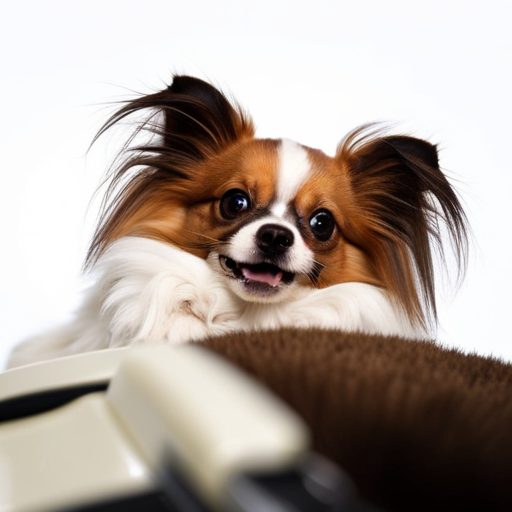
Are you tired of dealing with your Papillon's excessive shedding? Don't worry, we've got you covered! In this article, we'll share some top tips for managing your Papillon's shedding.
From understanding their shedding cycle to implementing regular grooming techniques, we'll help you keep your home fur-free and your pup happy.
Plus, we'll explore the importance of a healthy diet and how to manage allergies and skin conditions.
Get ready to say goodbye to endless vacuuming and hello to a cleaner, less hairy home!
Understanding the Papillon's Shedding Cycle
You should learn about the Papillon's shedding cycle to effectively manage their fur with regular grooming and a balanced diet. Understanding the Papillon shedding patterns and the factors that affect shedding in Papillons is essential for keeping their coat healthy and minimizing excess shedding.
Papillons have a single coat of long, silky hair that requires regular maintenance. They're known for being relatively low shedders compared to other breeds, but they still go through a shedding cycle. Typically, Papillons shed their coat twice a year, in the spring and fall, to adapt to changing weather conditions. During these times, you may notice an increase in shedding as they shed their old coat to make way for a new one.
Several factors can affect the shedding patterns in Papillons. The most significant factor is their exposure to natural light. Longer daylight hours in the spring and summer stimulate shedding, while shorter daylight hours in the fall and winter slow down the shedding process. Additionally, Papillons may shed more if they experience stress, changes in their environment, or fluctuations in their hormone levels.
To manage your Papillon's shedding effectively, regular grooming is crucial. Brushing their coat at least once a week helps remove loose hair and prevents matting. A balanced diet rich in omega-3 fatty acids can also promote a healthy coat and reduce excessive shedding.
Regular Grooming Techniques for Minimizing Shedding
Brushing your Papillon's coat regularly is an effective grooming technique for minimizing shedding. As a responsible pet owner, you want to keep your furry friend's coat healthy and free from excessive shedding. To achieve this, it's essential to use the right grooming tools and practice proper shedding prevention techniques.
One of the essential grooming tools for managing shedding in Papillons is a slicker brush. This brush has fine, short wires close together, which helps remove loose hair and prevent matting. Regularly brushing your Papillon's coat with a slicker brush will help to remove dead hair and keep their coat looking sleek and shiny.
In addition to brushing, another shedding prevention technique is using a deshedding tool. These tools are designed to remove the undercoat, which is the main culprit behind shedding. By using a deshedding tool, you can effectively reduce the amount of loose hair on your Papillon and keep your home cleaner.
Remember to be gentle when grooming your Papillon and avoid pulling or tugging on their hair. Regular grooming sessions not only help minimize shedding but also provide an excellent opportunity to bond with your furry companion. So, grab your grooming tools and start brushing your Papillon's coat regularly to keep them looking their best and reduce shedding in the process.
Creating a Healthy Diet to Reduce Excessive Shedding
Eating a balanced and nutritious diet can significantly reduce your Papillon's excessive shedding. One way to further reduce shedding is by providing regular exercise and mental stimulation. Physical activity helps to release excess energy and keeps your Papillon's coat healthy. Engaging in activities such as daily walks, interactive play sessions, and obedience training can help reduce shedding by promoting overall well-being.
Additionally, using supplements can also contribute to a healthy skin and coat. Omega-3 fatty acids are known to improve the quality of the coat and reduce shedding. These supplements can be found in fish oil or flaxseed oil. Vitamins and minerals such as biotin, zinc, and vitamin E can also support healthy skin and a shiny coat. Consult with your veterinarian to determine the appropriate dosage and type of supplements for your Papillon.
Managing Allergies and Skin Conditions to Prevent Excessive Shedding
To prevent excessive shedding in your Papillon, consider managing allergies and skin conditions by regularly bathing them with hypoallergenic shampoo and providing them with a balanced diet.
Papillons are known for their beautiful, long-haired coats, but sometimes they can experience excessive shedding due to allergies or skin conditions. Managing these issues is essential to keep their coat healthy and minimize shedding.
Allergies can cause skin irritation and lead to excessive shedding in Papillons. Identifying the allergens and taking steps to minimize exposure can help prevent shedding. Regular bathing with hypoallergenic shampoo can help soothe their skin and reduce allergic reactions. Additionally, keeping their living area clean and free of dust and allergens can also contribute to managing allergies and preventing shedding.
Skin conditions like dryness, dandruff, or fungal infections can also contribute to excessive shedding. Providing a balanced diet rich in essential fatty acids can help maintain healthy skin and reduce shedding. Omega-3 and omega-6 fatty acids are particularly beneficial for skin health. You can find these nutrients in fish oil supplements or by including foods like salmon, flaxseed, and walnuts in their diet.
Tips for Maintaining a Clean and Fur-Free Home With a Papillon
If you regularly vacuum and dust your home, you can minimize the amount of fur that accumulates with your Papillon. Cleaning hacks can be a lifesaver when it comes to managing the shedding of your furry friend.
One useful hack is to use lint rollers effectively. These handy tools are great for quickly removing fur from furniture, clothing, and even your car seats. Simply roll the sticky tape over the affected area, and watch as it picks up the loose hairs. Another tip is to keep a lint roller in multiple rooms of your house, so you can easily tackle fur wherever you find it.
Additionally, you can use damp rubber gloves to remove fur from fabric surfaces. Just wet the gloves, run your hands over the furniture, and the fur will stick to the gloves. Remember to rinse them off in between to remove the collected fur.
These cleaning hacks, combined with regular vacuuming and dusting, will help keep your home clean and fur-free, even with a shedding Papillon.
Frequently Asked Questions
What Is the Average Lifespan of a Papillon?
The average lifespan of a Papillon is around 12 to 16 years. They are generally healthy dogs, but some common health issues that may affect them include patellar luxation and dental problems.
Are Papillons Hypoallergenic?
Papillons are not hypoallergenic, so you may experience allergic reactions due to their shedding. To manage this, establish a regular grooming routine and consider shedding solutions. Don't fall for hypoallergenic myths.
How Often Should I Bathe My Papillon?
To keep your Papillon's coat healthy, bathe them every 4-6 weeks. Use gentle grooming techniques, like brushing their fur regularly, to minimize shedding. Papillons have a long, silky coat that requires regular maintenance.
Can I Use Human Shampoo on My Papillon?
You shouldn't use human shampoo on your Papillon. Dog-specific shampoos have benefits like maintaining their coat's pH balance and preventing skin irritation. Stick to products made for dogs to keep them healthy and happy.
What Is the Best Brush to Use for a Papillon?
The best brush for a Papillon is a slicker brush. It helps remove loose hair and prevents matting. Regular brushing, along with other grooming tools and tips for reducing shedding, can help manage your Papillon's shedding.
Conclusion
In conclusion, managing a Papillon's shedding can be achieved through regular grooming, a healthy diet, and addressing allergies or skin conditions.
By understanding their shedding cycle and implementing these tips, you can minimize excessive shedding and keep your home clean and fur-free.
Remember to regularly brush and bathe your Papillon, provide a balanced diet, and seek veterinary care if necessary.
With proper care, you can enjoy a happy and low-shedding experience with your Papillon companion.


