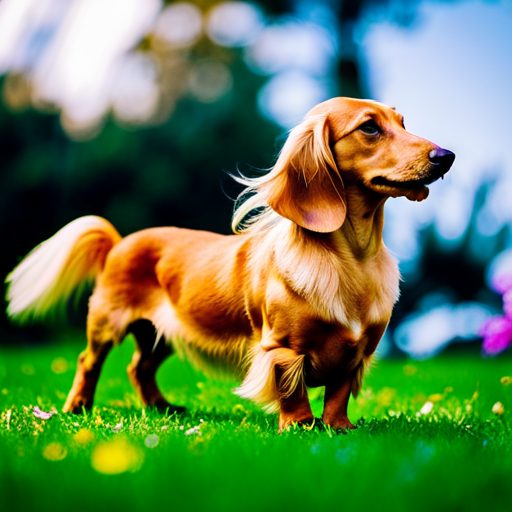
Are you struggling to train your precious baby Italian Greyhound? Don't worry, we've got you covered!
In this article, we'll share some valuable training tips that will help you establish a routine, socialize your pup, and address common behavioral challenges.
With positive reinforcement techniques and a little patience, you'll be well on your way to a well-behaved and happy Italian Greyhound.
So let's dive in and make training a breeze for you and your furry friend!
Establishing a Routine
You should start by gradually incorporating regular walks into your daily routine. This is an essential step in housebreaking your precious baby Italian Greyhound. Taking your pup for walks not only helps them burn off energy but also provides an opportunity for potty breaks. Make sure to choose a specific spot outside where you want your pup to do their business and encourage them to go there during your walks.
In addition to walks, crate training is another important aspect of housebreaking. Introduce your Italian Greyhound to their crate gradually, making it a positive and comfortable space for them. Start by leaving the crate door open and placing their favorite toys or treats inside. Encourage them to go in and explore on their own. As they become more comfortable, gradually close the door for short periods of time, gradually increasing the duration.
Remember to be patient throughout the housebreaking process. Accidents may happen, but it's important not to scold or punish your pup. Instead, reinforce positive behaviors by praising and rewarding them when they do their business in the appropriate spot. With consistent walks and crate training, your Italian Greyhound will soon become housebroken and feel more comfortable in their new home.
Socialization and Exposure
Your Italian Greyhound's socialization and exposure to new environments, people, and other animals is crucial for their development and overall well-being. One way to provide such experiences is by taking them to dog parks.
Dog parks are fantastic places for your furry friend to interact with other dogs and learn proper social behavior. It's important to remember that not all dogs will be friendly or well-behaved, so keep a close eye on your pup and intervene if necessary.
Leash training is also an essential aspect of socialization. By teaching your Italian Greyhound to walk calmly on a leash, you can ensure their safety in various environments. Start by introducing the leash gradually, allowing your pup to get used to the sensation. Use positive reinforcement, such as treats and praise, to reward good behavior.
Practice walking on a loose leash, and gradually increase the distractions to simulate real-world situations. With time and consistency, your Italian Greyhound will become comfortable and confident in different settings, making outings and interactions enjoyable for both of you.
Positive Reinforcement Techniques
Using treats and praise, you can reinforce good behavior in your Italian Greyhound and encourage them to continue learning and growing. One effective technique to achieve this is clicker training, which is based on reward-based methods. Clicker training is a positive reinforcement method that uses a clicker as a marker to communicate to your dog that they've done something right. By pairing the sound of the click with a treat or praise, your Italian Greyhound will quickly associate the click with a positive outcome.
To start clicker training, you need to first establish the connection between the clicker and the reward. Click the clicker and immediately follow it with a treat. Repeat this process several times until your dog understands that the click means a reward is coming. Once your Italian Greyhound makes this association, you can begin using the clicker to mark desired behaviors.
When your dog performs a desired behavior, such as sitting or lying down, click the clicker and give them a treat as a reward. This reinforces the behavior and increases the likelihood of them repeating it in the future. Remember to be consistent and patient with your training sessions, as it may take time for your Italian Greyhound to fully understand what you're asking of them.
In addition to clicker training, reward-based methods are also highly effective in teaching your Italian Greyhound good behavior. By rewarding your dog with treats, praise, or even playtime, you're showing them that their actions have positive outcomes. This positive reinforcement not only strengthens the bond between you and your dog but also motivates them to continue learning and growing.
Addressing Separation Anxiety
To effectively address separation anxiety in your Italian Greyhound, try implementing gradual desensitization techniques and reinforcing calm behaviors. Separation anxiety can be a distressing experience for both you and your furry friend. It's important to understand that your Italian Greyhound's anxiety isn't something they can control, but there are ways to help them cope with it.
One of the key coping mechanisms for separation anxiety is gradual desensitization. Start by leaving your dog alone for short periods of time, gradually increasing the duration as they become more comfortable. This helps them understand that being alone isn't a negative experience and builds their confidence.
Additionally, reinforcing calm behaviors can also be beneficial. Reward your dog for staying calm and relaxed when you leave and return, as this helps them associate your departure and arrival with positive experiences.
While these techniques can be effective, it's important to remember that every dog is unique and may require different approaches. If you find that your Italian Greyhound's separation anxiety is severe or not improving with these methods, seeking professional help is recommended. A professional dog trainer or behaviorist can provide you with personalized guidance and develop a tailored plan to address your dog's specific needs.
Common Behavioral Challenges and Solutions
When addressing common behavioral challenges with your Italian Greyhound, it's important to be patient and consistent in your training methods. Two common challenges that you may encounter are crate training and leash pulling.
Crate training can be a useful tool in teaching your Italian Greyhound good behavior and providing them with a safe space. To begin crate training, introduce the crate gradually and make it a positive experience for your dog. Start by placing treats inside the crate and encouraging your Greyhound to enter. Once they're comfortable going inside, gradually increase the amount of time they spend in the crate. Remember to never use the crate as a form of punishment.
Leash pulling is another common challenge that many Italian Greyhound owners face. To address this behavior, it's important to establish yourself as the leader during walks. Start by teaching your Greyhound to walk calmly by your side using treats and positive reinforcement. If your dog starts to pull, stop walking and wait for them to calm down before continuing. Consistency is key in teaching your Greyhound proper leash manners.
Frequently Asked Questions
How Do I Choose the Right Training Collar for My Italian Greyhound?
To choose the right training collar for your Italian Greyhound, consider the different types available. Make sure to properly size and fit the collar for your precious pup.
Is It Necessary to Enroll My Italian Greyhound in Obedience Classes?
Enrolling your Italian Greyhound in obedience classes is not necessary, but it can greatly benefit their socialization skills. However, there are alternative training methods, such as one-on-one sessions with a professional trainer, that can also help with their obedience training.
What Are Some Tips for Introducing My Italian Greyhound to New People and Dogs?
Introducing your Italian Greyhound to new people and dogs can be challenging. Start with gradual introductions and use positive reinforcement. Socialize them from an early age and always supervise interactions. Take it slow and seek professional help if needed.
How Can I Prevent My Italian Greyhound From Developing Separation Anxiety?
To prevent your Italian Greyhound from developing separation anxiety, start by crate training them. Use positive reinforcement and gradually increase the time they spend alone. Additionally, provide mental stimulation through interactive toys and puzzles to keep them entertained and occupied.
What Should I Do if My Italian Greyhound Displays Aggressive Behavior Towards Other Dogs?
If your Italian Greyhound displays aggressive behavior towards other dogs, it's important to understand the root cause. Implement positive reinforcement training to redirect their behavior and teach them appropriate ways to interact with other dogs.
Conclusion
In conclusion, remember that training your precious baby Italian Greyhound requires consistency, patience, and positive reinforcement.
By establishing a routine, socializing and exposing them to various environments, using positive reinforcement techniques, and addressing separation anxiety, you can help them develop good behaviors and overcome common challenges.
With your love and dedication, your Italian Greyhound will grow into a well-behaved and happy companion.
Enjoy the journey of training and bonding with your furry friend!